|
1983 - Bryan Adams - Cuts Like a Knife (A&M CD-3288)
This represents the earliest stage of CD audio mastering techniques. One of the big attractions of the CD format was its very
wide dynamic range and absence of surface noise, so the first generation of CDs that were released made full use of this. The
CD's digital audio format is inherently limited to a peak audio amplitude that is referenced as "0 dB" or "100%."
Unlike the variability of analog recording techniques, this limit cannot be exceeded. If you try to, you end up with a waveform
that is horribly distorted, due to the top and/or bottom of the wave being harshly limited to the maximum level -- or "clipped."
Early CDs were mastered with full respect to this loudness limit and did not use any clipping.
In this case, Bryan Adams' breakthrough album -- although full of stereotypically "loud" rock & roll music -- was mastered with a
great amount of "headroom"; the highest peak level on the entire disc is only 74.8%, or -2.52 dB. This peak level only occurs a
single time on the disc, in Track 9, whose waveform graph is shown here (with the stereo Left channel on top, and Right channel
on bottom):
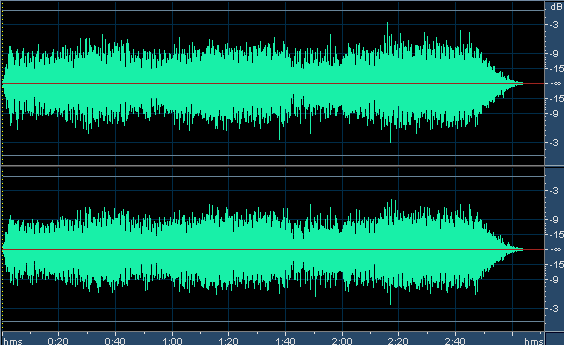
Obviously this peak (which occurs at around 2:16 in the song) is not even close to being clipped, and in fact the loudness of
the whole CD could be increased by 2.5 dB without sacrificing any quality or harming the content of the recordings in any way.
That single peak would simply be raised up to just below the 100% limit. You can think of this as a short person raising up the
height-adjustable driver's seat in their car. They would sit at a higher level, with their head just below the ceiling, but not
touching it -- in this case, literal "headroom."
1988 - Willie Nelson - What a Wonderful World (Columbia CK 44331)
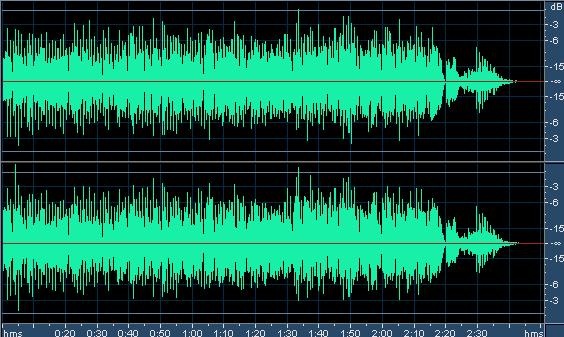
This is an example of what I was just talking about. With this CD, there is a single peak on the entire disc which does reach the
100% limit, but yet is still not "clipped", and every other track on the album has a lower peak level. Here is the waveform of
Track 6, showing the single 100% (0 dB) peak near the beginning:
And here is a highly "zoomed in" view of this peak, to prove that it is not clipped:
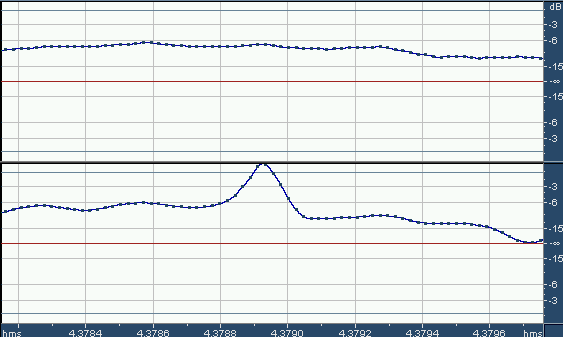
This represents the extreme of the most conservative form of CD mastering; where only a single peak, occurring only in a
single track, reaches the maximum level, and everything else on the disc is below it. However, as we shall see, as the years
went by and CDs became more and more popular, this pristine form of CD audio production became more and more rare!
1987 - George Michael - Faith (Columbia CK 40867)
Yes, we are stepping back a year, in this case to show a more contemporary pop music CD. On this particular CD, most of the
tracks contain multiple peaks which reach the 100% limit, but are still not clipped. Here is the waveform of the title track "Faith."
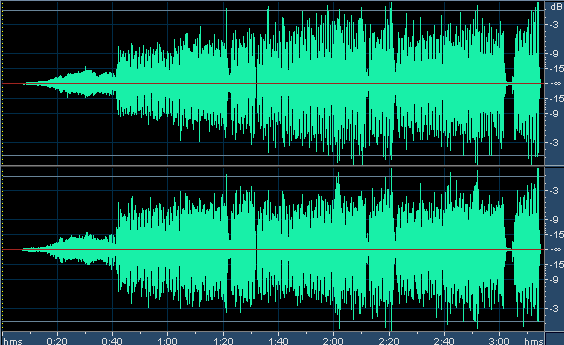
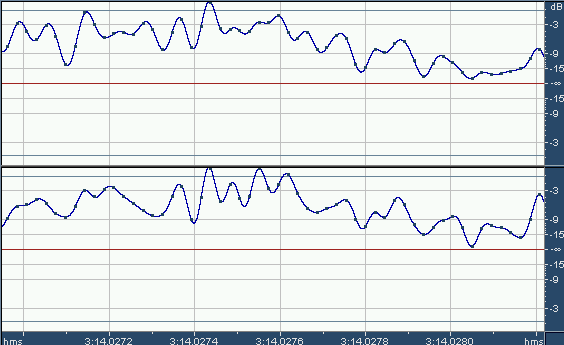
So, there are multiple instances in the song where the 100% / 0 dB peak level is reached. But are these peaks clipped? I
looked at all of them to check, and none of them were. Here is an example of a few of these 100% peaks in the song, and as
you can see, the shape of the waveform is still fully preserved:
For the average public's listening tastes, this is probably the ideal compromise between pristine, unharmed audio quality, and
the goal of having CDs sound a bit "louder" when played -- and most CDs from the late 1980s continued to respect this
compromise. But by the early 1990s, things had begun to change -- for the worse.
1991 - Amy Grant - Heart In Motion (A&M 75021 5321 2)
Alas, in the highly competitive pop music world, something had to give; who was first to do it may be lost to history, but by this
time, the trend towards the reduction of the CD's quality and dynamic range had already begun. In this particular case, not only
do many songs on the CD reach maximum peak level, a number of these peaks in each song are also "clipped" -- an instance
where the top and/or bottom of the waveform has been "flat-topped" or "hacked off" because it ran into the brick wall known as
the 100% / 0 dB limit. This is evident by looking at the waveform graph of Track 3:
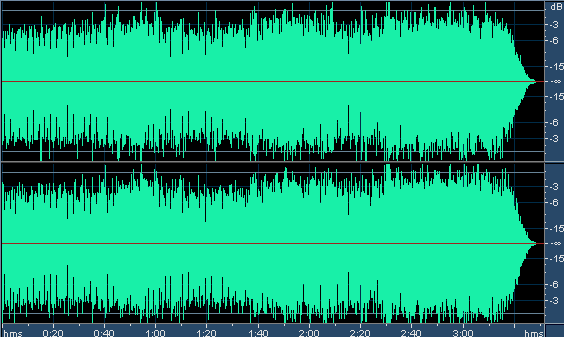
By zooming in on one of these peaks, I can illustrate just what I have been talking about:
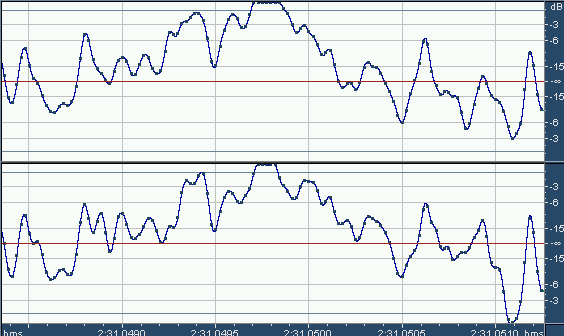
In this instance, seven samples (or "digital snapshots" of the sound) in a row are shoved up against the limit, and they have
nowhere to go, so they just form a flat line -- hence, our old friend known as "clipping". A perfectly flat line like this never
occurs in audio recording unless the audio is purposely clipped. What it is doing is generating a very unnatural "square wave,"
and when you play back this square wave, you get a burst of distorted sound. CD digital audio runs at 44,100 samples per
second. In this case, seven of these samples formed a square wave. That's 7/44100th of a second -- far too quick to be
directly heard. But when you add many of these clipped samples in each second of the song, the effect becomes more and
more noticeable as "clipping distortion" -- a harsh, crackly sound that is very unpleasant to the ear -- as we shall see below.
1995 - The Rembrandts - L.P. (East West/Atlantic 61752-2)
Everybody loves "I'll Be There For You", the theme song from the TV show "Friends", right? Well, have you ever looked at its
waveform graph? Yikes!
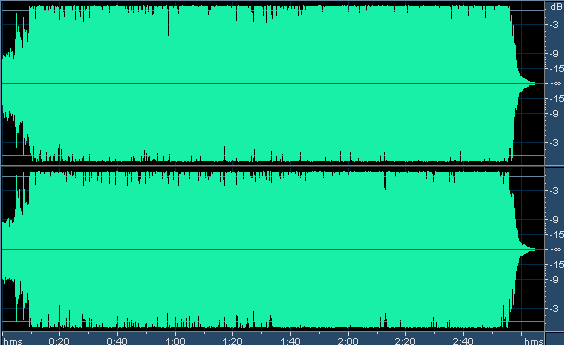
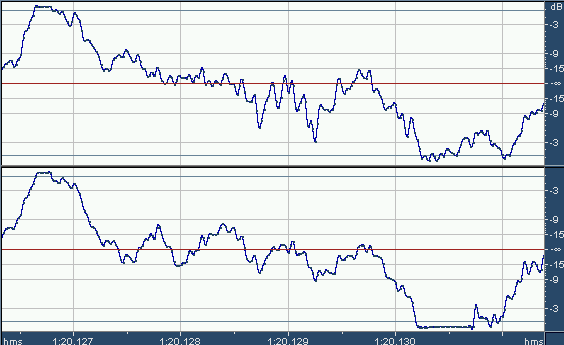
Although this particular track only reaches a peak level of 96.2% -- which is below the 100% limit and theoretically should be
free from "clipping" -- when you zoom in, you'll see that many of the MANY peaks that are strictly limited to this level (causing
the "solid block of sound" effect) are clipped, like this one:
The sad part is that when these peaks are clipped, or "hacked off" as I like to call it, the original content and quality of the sound
is lost forever. Although there are techniques to "guess" at the missing part of the waveform and "re-draw" a curved wave out
of the part that was formerly a flat line, this is not accurate to the original sound; it is merely an "artist's reconstruction", so to
speak. Thus, when aggressive peak clipping is used, the record company is DESTROYING part of the music. And if you thought
this song was bad enough, hold on and be prepared for a very sickening sight below...
1999 - Ricky Martin (C2/Columbia CK 69891)
By now I don't think I have to explain what you see below. And in this case, it probably will help explain why your ears start to
hurt after listening to "Livin' La Vida Loca" even for just a short time!
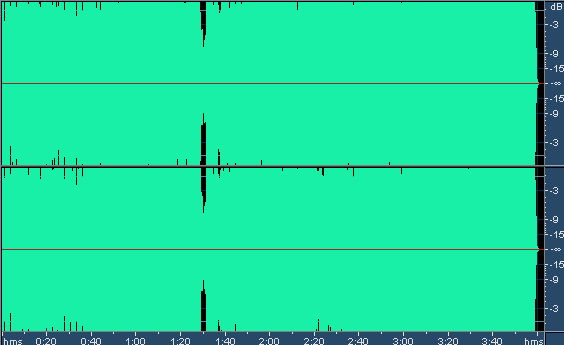
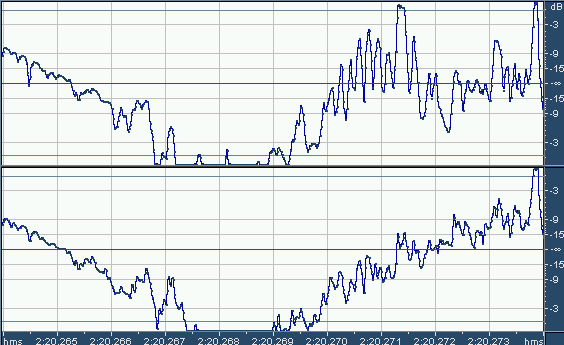
And as we zoom in, the audio carnage is apparent:
The Radio Loudness Fallacy
Okay, so the end result of all this stuff shown above is that CDs have gotten louder and louder over the years. But that also
makes them sound louder when played on the radio, right?
WRONG! Every radio station uses "audio processing" to accommodate a wide variety of audio programming and deliver a
consistent volume level, so that you're not always reaching for the volume control to turn up quiet songs and turn down loud
songs. The goal of this is to make every song come out of your radio at a fairly equal volume level. The station's audio
processing does this by carefully compressing, limiting, and yes, even clipping the audio. It also equalizes the bass and treble
levels so one song doesn't sound bassy and muffled and the next doesn't sound tinny and shrill.
When properly adjusted, this audio processing can work wonders, and gives radio stations just the type of sound they're looking
to provide their listeners with, be it a soft and relaxing Classical music station, or a loud and brash Heavy Metal rock station.
But... this audio processing relies on the peaks and valleys of the incoming audio; it raises up the quiet spots and limits down
the loud spots.
But when everything is consistently loud all the time, the radio station's audio processor has nothing to do but to limit down the
volume level, and since the incoming music contains virtually no variations in loudness, then it stays consistently quiet when
played on the air. It's like walking along a street and passing a construction zone where they have a jack-hammer going. Due
to the consistently loud noise, you have no choice but to cover your ears until it stops.
Compare that example to a fireworks display. You may cover you ears during the explosions, but otherwise, things are much
quieter and you could actually amplify the sounds around you and not damage your hearing. This is like the CDs of the 1980s
shown above. The high peaks get limited down so that the radio station doesn't exceed the signal level which it can transmit,
but otherwise the rest of the audio actually gets raised in level, so that it comes out louder on the air.
And you can get this same effect at home by simply TURNING UP YOUR STEREO'S VOLUME CONTROL. You want your music to
be loud? You can make it loud yourself -- and the full quality and dynamic range of the music is preserved. Yes, even the
Bryan Adams CD from 1983 can be played louder than Ricky Martin's horribly produced CD -- the choice is up to you. But
when all of your CDs are recorded to be loud right on the discs themselves, you don't have this choice anymore; you no longer
have a variety of "loud" music and "quiet" music to choose from and to play at a volume level that suits your musical taste.
The record companies are not only filling your CDs with distorted, corrupted audio, they are forcing you to listen to your music
in a certain manner -- do you really want that?
Meanwhile, in Europe...
At least for some record companies "across the pond", it took a lot longer for the "loudness wars" to catch up with them than it
did in the USA. Take, for example, the original April 1999 CD single release "Swear It Again" by Westlife (RCA/BMG 74321
66206 2) -- which was the first of a record-breaking string of #1 U.K. hits for this Irish pop group:
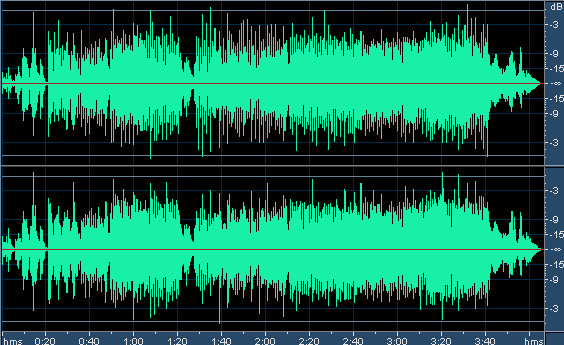
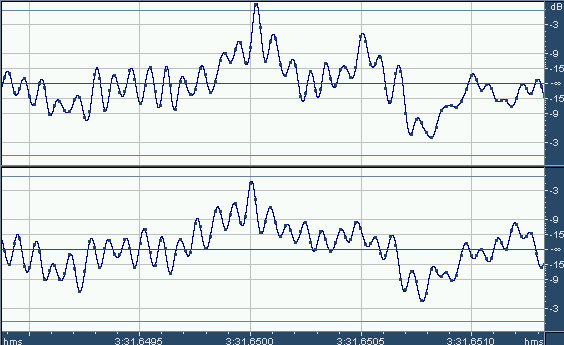
This is just like the 1988 Willie Nelson CD shown far above on this page. Only a single peak during the entire song reaches
maximum level -- in this case, 97.1%, and it is not clipped:
But a funny thing happened to this very same song when it ended up on Westlife's first full album (RCA/BMG 74321 713212)
later in the year:
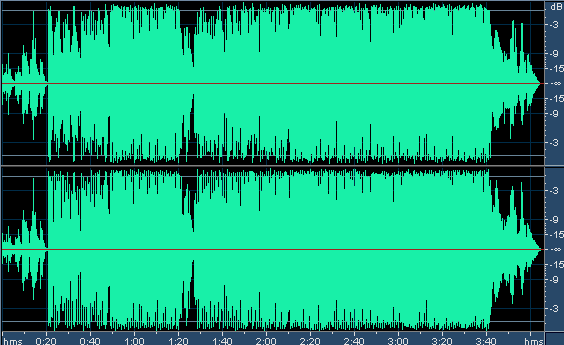
That may look like a drastic increase in loudness, and it is, but notice that as compared to American pop music of the 1990s, it
still has a decent amount of "wiggle room" for the peaks and valleys of the sound to occur. And if we zoom in, only five peaks
during the entire song occur at the maximum level, and NONE OF THEM ARE CLIPPED, as you can see from these two:
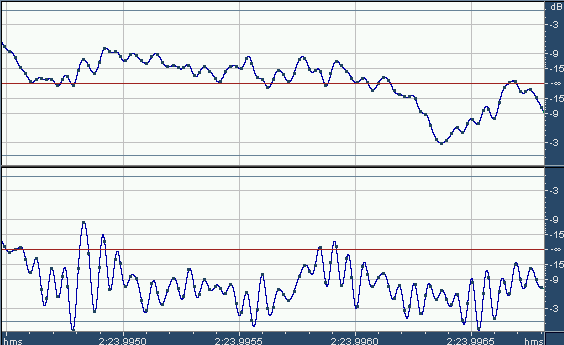
This is pretty much what I would consider to be the limit of RESPONSIBLE CD PRODUCTION. It allows the music to sound "loud"
without DESTROYING the audio through the use of peak clipping.
But, alas, the influence of American pop music became too great, and the U.K. record companies felt they had to respond by
also resorting to the same tricks for their music. Here is an example from 2000, the first track from Westlife's second album
"Coast To Coast" (RCA/BMG 74321 824302):
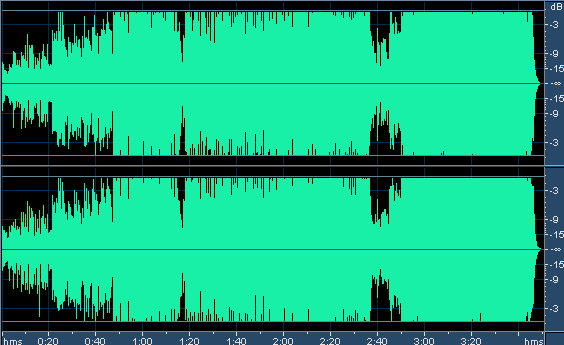
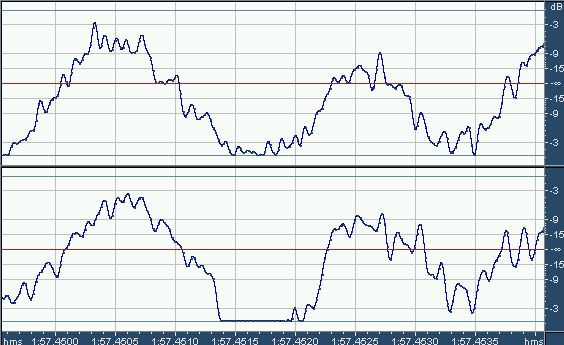
What I don't get is that this song has its peak level set unnaturally low, to only 88.1% out of the 100% possible -- and yet, even
with over 1 dB of "headroom" to work with, the audio is still clipped in numerous places during the song:
You might just write this off as somebody setting the recording level a bit low, but it is interesting to compare it to the same
song on the Asian release of this album (RCA/BMG 74321 803772):
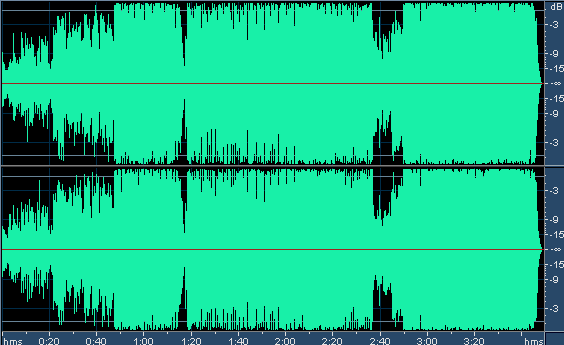
The peak level is now much closer to the CD's maximum limit -- in this case 99.3% -- and at least some of the peaks and
valleys can still be seen amongst the highly compressed audio. But, unfortunately, when zoomed in, even this dynamically
superior Asian release also used clipping on some of the peaks:
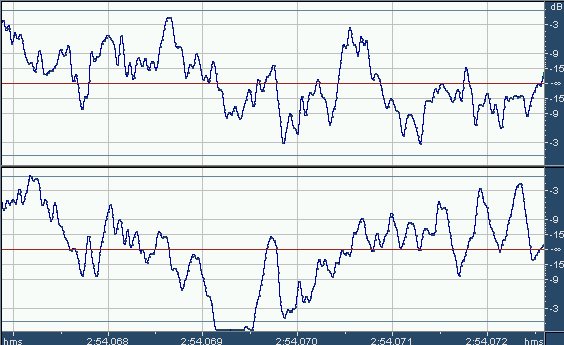
Note that in each case above, when clipping is present, I have picked the most clipped example out of the entire song; that is,
the instance which has the highest number of "flat-topped" samples. So, while this Asian version still contains clipping, it is less
drastically clipped than the U.K. release, while it actually has a higher peak level. Are Asian ears more sensitive to clipping
distortion than British ears? Maybe the record company knows something we don't....
|
